
What is hotel rate intelligence?
Hotel rate intelligence is the data-driven process of using automated software to collect, aggregate, and analyze real-time market data, competitor pricing strategies, and seasonal trends. It goes beyond seeing what competitors charge. It tells you what to do about it - and when.
Rate intelligence transforms raw market data into actionable profit for hotels, resorts, and vacation rentals. By 2026, rate intelligence is increasingly AI-driven, focusing on automated, contextual insights rather than just raw data. The shift matters: you move from "Competitor A is at €189" to "You can safely raise your Saturday BAR from €164 to €189 for 2-night stays because demand signals support it."
The distinction between hotel rate shopping and hotel rate intelligence comes down to interpretation. Rate shopping is seeing prices. Rate intelligence is knowing exactly what those prices mean for your next move.
Typical data sources include OTAs (Booking.com, Expedia, Agoda), metasearch engines (Google Hotel Ads, Trivago), brand.com rates, Airbnb/Vrbo listings, and your own PMS performance data. A hotel rate shopper is a specialized tool that automates the collection, comparison, and monitoring of these rates across channels, making it essential for benchmarking, maintaining rate parity, and enabling dynamic pricing decisions. The combination creates market intelligence that reflects how guests actually see your competitive landscape.
Concrete example: A 120-room city hotel catches a €30 undercut on Booking.com two days before a sold-out concert weekend. With rate intelligence, they spot the parity break within an hour, fix the leak, and push a €25 rate increase before competitors react. Without it, they discover the issue Monday morning - after losing both margin and direct bookings.
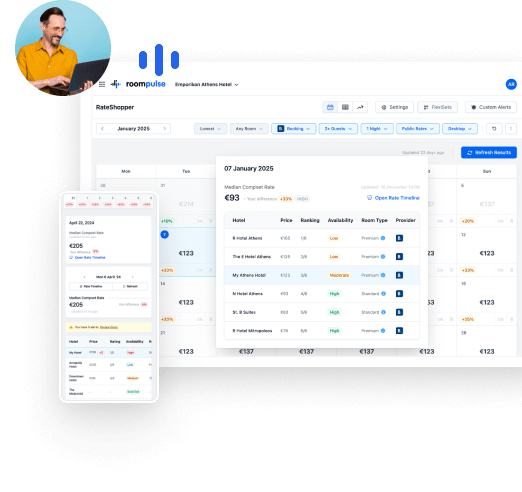
How rate intelligence fits into modern revenue management
Rate intelligence sits at the front of your revenue management and distribution workflow. The flow typically runs: rate intelligence tool → revenue manager decisions → RMS (if used) → channel manager → OTAs and direct bookings. Often, a management system integrates these tools to streamline revenue and distribution processes, ensuring seamless data flow and automation. It's the input layer that makes everything downstream smarter.
Rate intelligence is a foundational component of modern revenue management that allows hotels to shift from manual, guess-based pricing to dynamic, data-driven decisions. Real-time data visibility allows hotels to create dynamic pricing strategies that reflect current market conditions, which is crucial in the volatile hospitality industry.
Contrast this with snapshot tools: Once-per-day dashboards show you yesterday's prices. Continuous rate intelligence catches market trends within hours, letting you push changes before the booking window closes.
Example workflow for a 70-room boutique hotel:
- 8:30 AM: Revenue manager checks market rates and occupancy for the next 7 days
- 11:15 AM: Alert fires - competitor sold out for Friday, raised Saturday rate by €22
- 11:40 AM: Manager validates demand in dashboard, pushes €15 increase via channel manager
- Result: Captured incremental revenue before afternoon search traffic peaks
Using real-time data, hotels can identify booking patterns and demand fluctuations, which are essential for making informed pricing decisions. When your intelligence is stale, your RMS models inherit that staleness - and your forecast accuracy suffers.
From rate shopping to rate intelligence: what changes in practice?
The shift from a simple hotel rate shopping tool to full pricing intelligence software changes your daily operations in measurable ways. Modern hotel rate shopping software not only monitors competitor prices but also provides valuable insights and automation features to optimize your revenue strategies. Automated pricing systems can dynamically adjust your rates based on real-time market conditions, competitor intelligence, and pre-set rules, streamlining your dynamic pricing strategies.
What changes:
- From checking competitor rates manually once a day → to automated monitoring every 30–60 minutes
- From "my compset is cheaper" → to "I can safely move my BAR from €164 to €189 for 2-night stays this weekend"
- From generic email alerts → to prioritized, actionable alerts tied to revenue impact
- From guessing at demand trends → to seeing search intensity and competitor sell-out velocity
Rate intelligence groups signals that matter: demand spikes, competitor sell-outs, price drops, and parity breaks. Each signal type connects to a specific decision.
Example: A 40-room coastal property in August sees real-time competitor pricing data showing three compset hotels have raised Friday rates from €169 to €198 by midday Tuesday. Search pressure is up 40% week-over-week. The revenue manager pushes a €20 increase before the Wednesday afternoon booking surge - capturing €2,400 in incremental weekend revenue.
Automating the rate shopping process helps hotels save time and resources, allowing revenue managers to focus on strategic decision-making rather than manual data collection. These tools enable data driven pricing decisions by leveraging real-time competitive intelligence and automation. Tools like Roompulse position themselves as next-generation rate shopper software that go beyond static rate lists.
Core elements of effective hotel rate intelligence
Every serious intelligence tool needs specific building blocks to support hotel revenue management. Understanding the key features of these tools is essential for making informed revenue decisions. The key is linking each element to a specific decision.
Market and competitor visibility you can actually act on
Comprehensive coverage means tracking Booking.com, Expedia, Agoda, Airbnb, Vrbo, plus brand.com and regional OTAs across multiple online travel agencies. But coverage alone isn't enough - you need LOS and room-type-aware comparisons, and you must define your compset based on your target market to ensure relevant and actionable market analysis.
Effective rate intelligence features include automation of competitor price collection, which saves time and reduces the risk of human error in pricing decisions.
- Compare your Superior Queen with breakfast vs. equivalent compset offers, making sure your compset reflects your target market's guest segments
- See member rates, mobile rates, and public rates in one unified view
- Filter by length-of-stay to catch 3-night discounting patterns competitors use
Example: Your dashboard shows 6 of 8 competitors have moved Saturday hotel rates above €210, while you're still at €179. That's not information - that's a €31 decision waiting to happen.
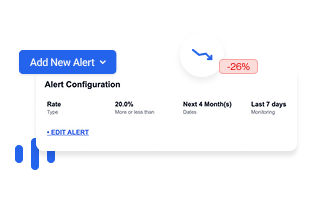
Real-time data refresh and intelligent alerts
Static, once-a-day rate snapshots fail in dynamic pricing environments. Frequent monitoring of competitor rates and market dynamics is essential to stay responsive and make timely adjustments, especially during high-demand periods or market fluctuations. Real-time data enables hotels to adjust their pricing strategies quickly in response to market shifts, ensuring they remain competitive and maximize revenue opportunities. Adjusting the frequency of monitoring based on market dynamics is crucial for making timely pricing decisions.
Rate shoppers monitor all channels simultaneously and alert hotels to pricing discrepancies, helping to resolve issues before they impact revenue.
Alert types that matter:
- Parity breaks: "Your OTA rate is 12% below your direct site"
- Undercut thresholds: "You're 10% cheaper than compset median on a high-demand date"
- Demand spikes: "Search volume up 60% for next Saturday"
- Event surges: "Concert announced - competitors moving first"
Response time target: Catching critical price changes or parity issues within 1–2 hours rather than the next day.
True rate parity and distribution control
Rate parity means maintaining consistent pricing for the same room type across all distribution channels, including OTAs, metasearch, GDS, and direct websites. Hotels must maintain rate parity across all distribution channels to protect brand reputation, ensure compliance with OTA agreements, and optimize revenue. Rate intelligence tools continuously scan all connected channels for undercuts of your official BAR.
Maintaining rate parity helps protect a hotel's brand reputation and ensures that guests see consistent pricing regardless of the booking channel they choose.
Example: You discover a wholesaler's leaked rate makes you 18% cheaper on an obscure OTA. With property-level and portfolio-level parity dashboards, you catch it before weekend demand peaks - protecting both margin and direct bookings.
Forward-looking demand and event impact
Event calendars (concerts, trade fairs, sports, festivals) and historical data feed into demand forecasts that matter 30–90 days out. Advanced rate intelligence tools use historical performance and current market demand to forecast demand and optimize pricing strategies, offering actionable insights by analyzing large data sets to identify booking patterns, demand fluctuations, and seasonal trends.
Forward-looking data includes:
- Search intensity from metasearch platforms
- Pace of competitor sell-out
- Length-of-stay shifts signaling demand patterns
Example: Local marathon in September - competitors are already 70% full at D-45 while your pickup is lagging at 35%. Rate intelligence flags the gap and shows you're underpriced by €30 relative to the market.
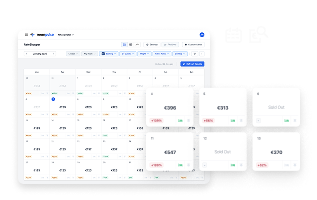
Compset and portfolio flexibility
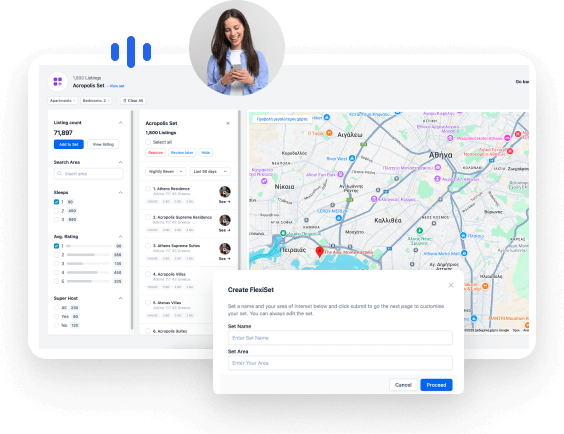
Fixed compsets miss nuances. Hotels need seasonal, weekday/weekend, and event-specific compsets. Flexible "flexisets" that include hotels, hostels, and Airbnbs in the same area provide a realistic view of alternatives.
- Use a special compset only for Friday–Saturday city-break demand
- Build a separate corporate midweek compset
- Multi-property groups can create regional or brand-based views to coordinate pricing moves, ensuring all stakeholders have access to the same market intelligence for aligned decision-making.
Concrete ways rate intelligence maximizes revenue and direct bookings
Most benefits fall into four buckets: higher ADR when demand is strong, less dilution through parity issues, better occupancy in soft periods, and more direct bookings. Hotels using rate shopping tools can see an average revenue increase of 8-15% within the first year by ensuring their pricing is competitive and maximized. By closely monitoring market pricing trends, hotels can stay competitive and identify opportunities to achieve maximum revenue in a dynamic market.
Capture higher ADR when the market can bear it
Spotting early price changes and faster sell-out in the competitive set allows incremental price moves. Dynamic pricing strategies allow hotels to adjust rates based on real-time market conditions, helping to capture more bookings and optimize revenue.
Example: Friday/Saturday in July where competitors move from €169 to €219 over 10 days. With rate intelligence you follow proactively (+€8, then +€12), not reactively after you've already sold rooms cheap.
Impact: A 100-room property at 85% occupancy sustaining a €5 ADR lift over a busy month captures €12,750 in incremental revenue.
Protect margin by fixing parity leaks fast
Effective revenue optimization requires continuous monitoring of competitor rates and market trends to make informed pricing decisions that align with demand fluctuations. Persistent parity breaks cost conversions.
Example: A 90-room city hotel loses 10–15 direct bookings per month because one OTA shows rates 12% cheaper due to a leaked wholesale rate. Real-time parity alerts plus evidence trails make fixing the issue same-day possible.
Fill low-demand periods without racing to the bottom
Rate intelligence reveals when the whole market is soft (midweek in November) vs. when you're underperforming specifically. Use targeted offers and minimum-stay tweaks instead of pure rate cuts. In contrast, during high demand periods, it's crucial to monitor market data more frequently and adjust your dynamic pricing strategies promptly to maximize revenue.
Example: Reducing BAR by only 5% but adding a 3-for-2 weekday offer when competitors slash 20% to chase occupancy. You maintain rate integrity while capturing volume.
Win more high-value direct bookings
Ensure your official site is always at parity or slightly better value than OTAs. Rate intelligence tools provide real-time data for accurate pricing decisions, allowing hotels to optimize pricing by offering the right price at the right time.
Example: Your site shows €189 with breakfast included while OTAs stay at €189 room-only during a city festival. Same rate, better value - direct bookings increase.
Shifting even 3–5% of room nights from OTAs to direct can significantly improve net revenue after distribution costs. Accurate pricing and streamlined booking processes not only drive more direct bookings but also boost customer satisfaction. By focusing on direct bookings, revenue managers can enhance customer satisfaction by providing better value and service.
What to look for in a hotel rate intelligence tool
Independent and boutique hotels (10–300 rooms) must avoid both underpowered widgets and overcomplex enterprise platforms. Tie every feature back to: "What decision will this help me make faster?"
Reliable data coverage and accuracy
Look for direct connections to major OTAs and metasearch rather than slow, cached screen scraping. Anomaly detection should filter obvious misloads (stray €9 rates) before they mislead your team.
Roompulse analyzes 20M+ competitor rates daily across 150+ countries - a proxy for robust coverage.
Actionable dashboards and alerting
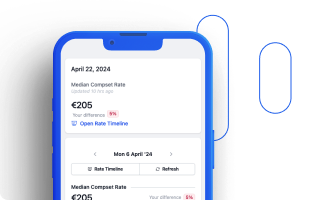
Clean, mobile-friendly views matter for quick checks. Revenue managers need filters for date range, LOS, room type, compset subsets, and distribution channels.
Design should support "scan in 3 minutes, decide in 10" - not 40-minute data-digging sessions.
Deep integrations with channel manager and PMS
The ideal loop: intelligence tool sees opportunity → suggests new rate → pushes to channel manager for execution. Systems like Webhotelier and SabeeApp integrate with Roompulse, avoiding manual retyping across multiple extranets.


Flexibility for different property types
A 25-room rural inn and a 200-room city hotel have different needs. Look for custom compsets per segment, weekday vs. weekend strategies, and separate views for suites vs. standard rooms.
Clear ROI and time savings
Quantify current manual rate shopping time (typically 5–8 hours per week) and set a target reduction. Track pre- vs. post-implementation metrics: ADR, RevPAR, parity issues per month.
Using rate intelligence day-to-day: practical playbook
A realistic daily and weekly routine keeps rate intelligence actionable rather than aspirational.
Daily routine for revenue managers and GMs
15–20 minute morning routine:
- Check today + next 7 days occupancy and market rates
- Scan priority alerts (undercuts, event spikes, parity issues)
- Adjust BAR and key LOS rates via RMS or channel manager integration
Quick mid-afternoon check on same-day and next-day pickup catches volatile market conditions. Mobile dashboards make these checks feasible even when covering operations on-site.
Responding to alerts: from notification to price change
Simple rule-based framework: If you're more than 12% cheaper than compset median and occupancy exceeds 70%, increase by 5–10%.
Scenario: Thursday alert shows competitors raised Saturday rates due to a last-minute event listing. Workflow: review alert → validate in dashboard → apply price change → confirm in channel manager. Document changes to link revenue results back to specific pricing decisions.
Weekly and monthly optimization cycles
Weekly review:
- Next 30–45 days on the books vs. market prices
- Events and school holidays impacting the next 60–90 days
- Past week's alerts: which ones were acted on, with what outcome
Monthly: Revise compsets, adjust alert thresholds, and refine dynamic pricing rules. This rhythm keeps properties ahead of competitors still reacting to end-of-month reports.
How Roompulse approaches hotel rate intelligence
Roompulse is built for independent and boutique hotels that need hotel pricing intelligence without enterprise complexity. Core strengths include advanced rate shopping, intelligent alerts, flexisets, competitor pace analysis, and event impact tracking.
Rate intelligence is the process of collecting, analyzing, and using real-time competitor data and market trends to optimize hotel room pricing. Roompulse turns that process into fewer surprises, faster reactions, and more confident pricing decisions.
Typical deployment: 5-minute setup, first alerts same day, first measurable impact within 1–2 weeks. Integrations with Webhotelier, SabeeApp, and other systems let you push recommended prices directly to your channel manager.